
Evening protocols
Room temperature is the most underrated sleep variable
Core body temperature has to fall for sleep to begin. Most bedrooms are working against that, and fixing it costs less than most of the alternatives.
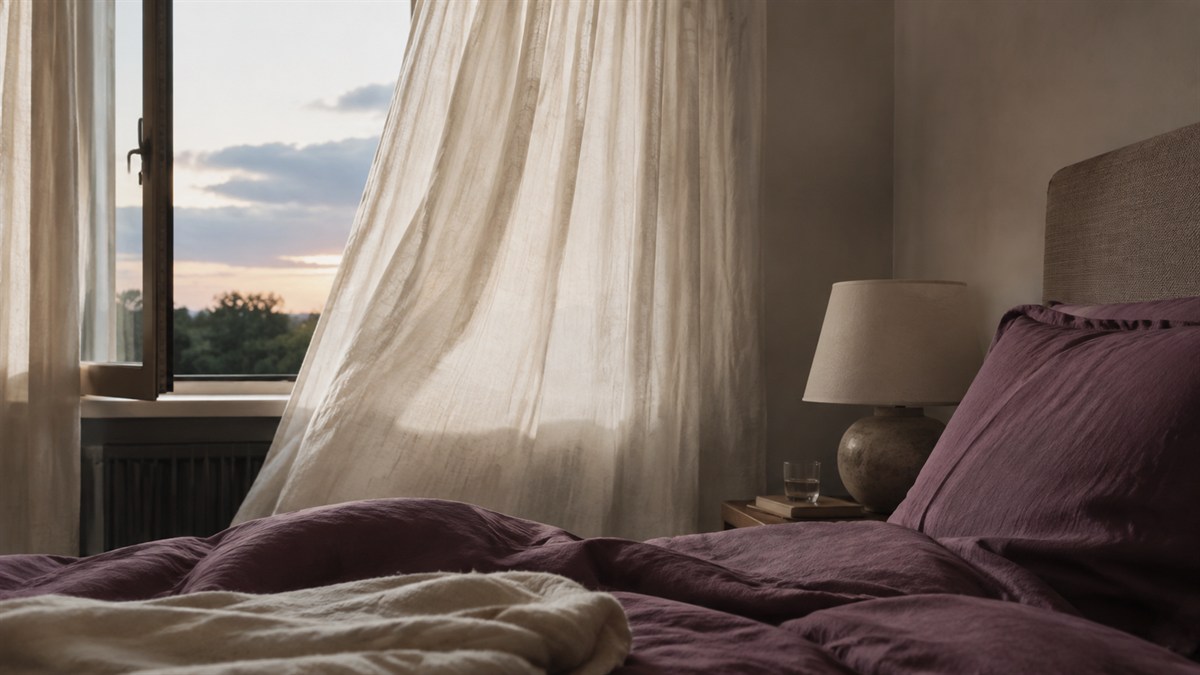
Sleep onset is preceded by a drop in core body temperature of roughly two to three degrees Fahrenheit. A room that prevents that drop makes falling asleep harder, and a great many bedrooms do exactly that.
The short version
- Core temperature must fall for sleep onset, and a warm room impedes it.
- Cooler bedrooms, commonly cited around the mid-to-high sixties Fahrenheit, are widely recommended on this basis.
- A warm bath or shower one to two hours before bed helps by driving peripheral heat loss afterwards.
- Bedding and sleepwear affect the microclimate more than the thermostat number does.
The physiology
As the circadian system moves toward the sleep phase, blood flow to the skin increases, heat is lost through the extremities, and core temperature drops. That drop is closely tied to the timing of sleep onset.
A bedroom warm enough to prevent efficient heat loss delays the process. This is why people struggle to sleep in heat waves, and why the effect is so much larger than most people assume before they experience it.
The counterintuitive bath finding
A warm bath or shower one to two hours before bed helps sleep onset, which sounds backwards. The mechanism is that warming the skin drives peripheral vasodilation, and the subsequent heat loss accelerates the core temperature drop.
Timing matters. Immediately before bed the effect is weaker because core temperature has not yet fallen. One to two hours ahead is the interval most often described in the literature.
Cheap fixes first
Before considering a cooling mattress system, work through the free and inexpensive options: a lower thermostat setting overnight, lighter bedding, breathable sleepwear, and uncovering feet, which are unusually effective heat exchangers.
Cooling mattress systems do work and they are expensive. They also solve a problem that better bedding and an open window solve for many people. Try the cheap version first.
Common questions
What temperature exactly?
Recommendations commonly sit in the mid-to-high sixties Fahrenheit, but individual comfort varies and the right answer is the one that lets you fall asleep without waking hot.
What if my partner runs cold?
Separate bedding weights on one bed solves this more cheaply than most alternatives.
Sources
- Sleep trends 2026 optimisation guide — https://mattressmiracle.ca/blogs/mattress-miracle-blog/sleep-trends-2026-optimization-guide
- Sleepmaxxing: practices and evidence — https://superpower.com/guides/emerging-health-topics/sleepmaxxing-trend-practices-evidence-based