
Sleep architecture
Orthosomnia: when tracking your sleep starts damaging it
Clinicians have been describing this for years. The trend that made sleep tracking universal made the problem larger.
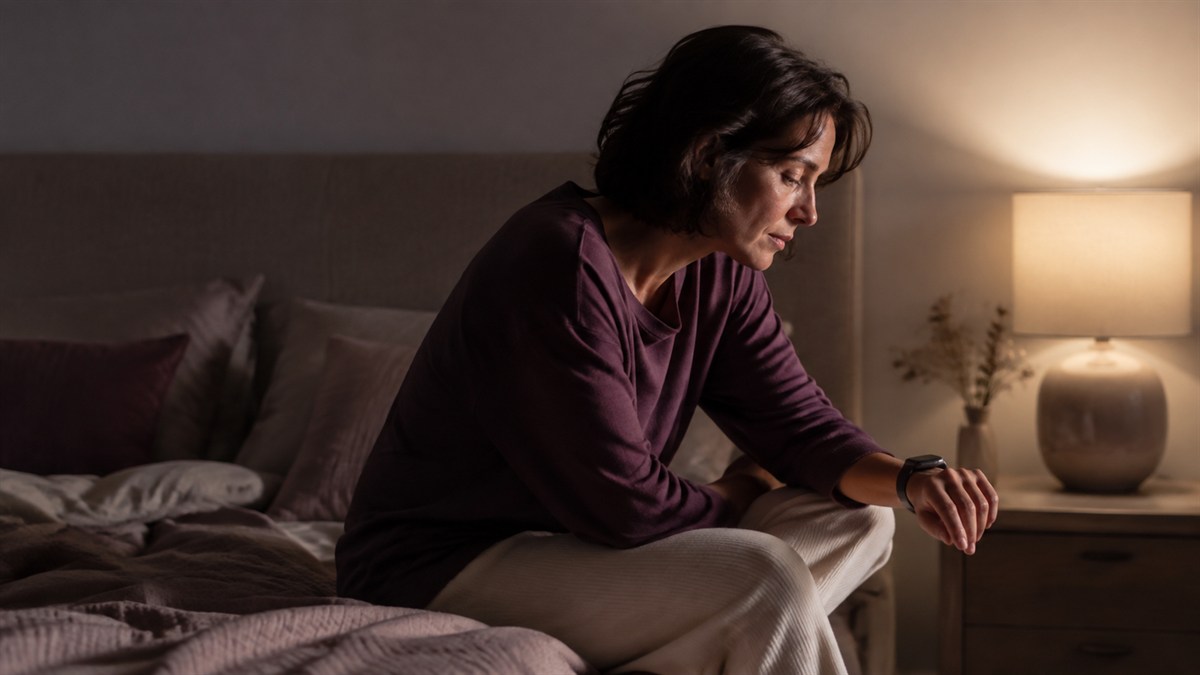
A patient arrives convinced their sleep is broken. Their history sounds normal, they wake feeling adequate, they function well. What is distressing them is a number their wrist produced at six in the morning.
The short version
- The term orthosomnia was introduced in a Journal of Clinical Sleep Medicine case series describing patients whose anxiety about sleep scores worsened their sleep.
- It is a documented clinical phenomenon, not a rhetorical device.
- Consumer devices estimate sleep stages using algorithms that disagree with polysomnography, particularly on stage boundaries.
- The usual clinical intervention is to stop looking at the data.
Where the term came from
Researchers described a group of patients presenting with sleep complaints driven primarily by tracker data, in a paper whose title captured the tone exactly: patients so focused on being good at sleeping that the pursuit itself became the obstacle. The pattern has been widely recognised since.
The mechanism is not mysterious. Anxiety about sleeping is one of the most reliable ways to delay sleep onset and increase night-time waking. A nightly quantified reminder of how you performed feeds that anxiety directly.
Why the number deserves less trust than it gets
Consumer devices infer sleep stages from movement, heart rate, and sometimes temperature. Against polysomnography, they are reasonable at distinguishing sleep from wake and considerably weaker at staging, particularly at boundaries between light and deep sleep.
Devices without skin contact face a harder problem still. A bedside sensor mat using pneumatic and acoustic sensing can reach around 88 percent sensitivity for moderate-to-severe sleep apnoea, comparable to some home sleep tests, but it cannot measure heart rate variability, temperature, or blood oxygen at all, because those need contact.
So the deep sleep percentage that ruins someone's morning is an estimate from a proprietary model, presented as a measurement.
The device is not disturbing their sleep. The relationship with the score is.
Althermia
What to do about it
If your sleep score regularly affects your mood, stop looking at it. Not permanently for everyone, but for a few weeks, to re-establish that how you feel is the primary signal. Several devices allow scores to be hidden while still recording.
Then judge by daytime function: alertness, mood, concentration, and whether you need caffeine to reach midday. Those are the outcomes sleep exists to produce, and they are the ones clinicians actually assess.
If sleep genuinely is poor, that is worth addressing properly. Chronic insomnia has an effective first-line treatment and it does not involve buying anything.
Common questions
Should I throw the tracker away?
Not necessarily. Trends across weeks can be informative. Nightly score-checking is where the harm concentrates.
Are trackers accurate for anything?
Sleep and wake timing, and duration, are reasonably estimated. Stage percentages should be treated as rough. Trends beat single nights in all cases.
Sources
- Sleep initiative trends for 2026, Global Wellness Institute — https://globalwellnessinstitute.org/global-wellness-institute-blog/2026/03/30/sleep-initiative-trends-for-2026/
- Best sleep tracking devices of 2026 — https://www.circular.xyz/post/best-sleep-tracking-devices